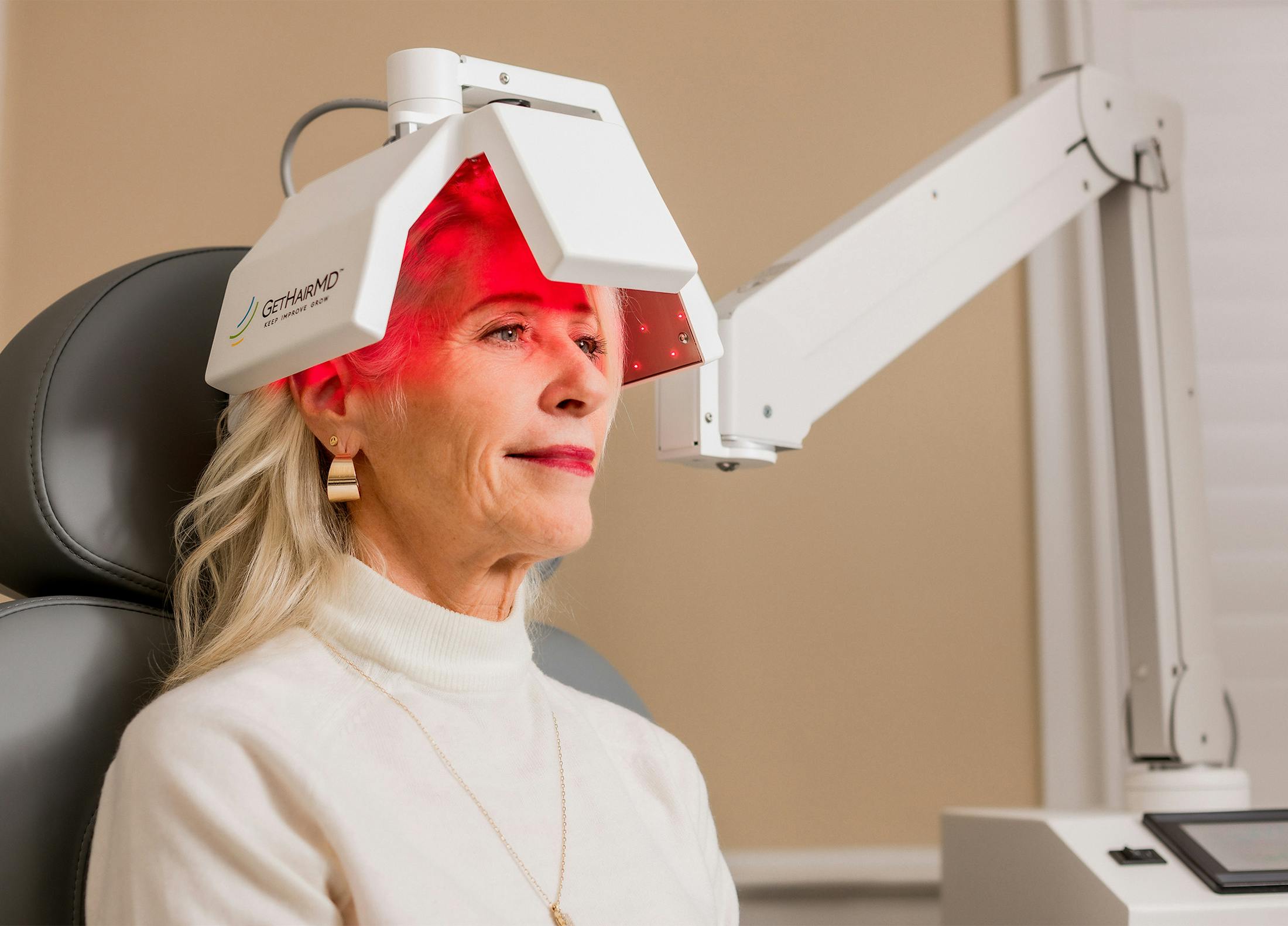
Overview: What Is Laser Hair Growth Therapy?
Laser growth therapy, often referred to as low-level laser therapy (LLLT), delivers specific wavelengths of light to the scalp to stimulate cellular function within active hair follicles. The energy is absorbed at the follicular level and is believed to enhance circulation, increase metabolic activity, and support the hair growth cycle. Note that this therapy does not implant new follicles or alter genetic predisposition. Instead, it aims to strengthen existing follicles that are thinning but still viable. When follicles remain alive but weakened, stimulation may improve thickness and prolong the growth phase of the hair cycle.
Laser Growth Therapy at Shomorony Facial Plastic Surgery
Laser growth therapies within our practice utilize FDA-cleared low-level laser therapy (LLLT) systems designed to deliver precise wavelengths of red light to the scalp. These devices are selected based on output consistency, depth of penetration, and published clinical data supporting follicular stimulation. We do not rely on cosmetic light devices or unverified consumer-grade systems.
Treatment may be performed in-office using medical-grade laser platforms or prescribed through physician-vetted home devices that meet clinical standards for wavelength and energy delivery. The specific modality is chosen based on pattern severity, compliance considerations, and integration with other therapies. Laser therapy is introduced only when follicular viability is confirmed and when stimulation is likely to provide meaningful support. In many cases, it is combined with medical therapy, PRP, exosomes, or post-transplant maintenance to protect surrounding native hair.
Laser growth therapy options at our practice include:
- FDA-cleared low-level laser therapy (LLLT) systems delivering calibrated red light wavelengths (typically in the 630–680 nm range) designed to stimulate follicular activity.
- Medical-grade laser caps or helmets prescribed for home use, selected for consistent energy output and clinical reliability rather than consumer-grade variability.
- In-office red light therapy sessions using professional laser platforms with controlled dosing protocols.
- Physician-vetted home laser devices that meet specific standards for wavelength, diode count, and treatment coverage.
- Adjunctive photobiomodulation protocols integrated alongside PRP, exosome therapy, or post-transplant maintenance.
- Customized frequency schedules tailored to follicular viability and pattern stability rather than generic manufacturer guidelines.
Laser Hair Growth Therapy in Greenwich, CT: Ideal Candidates
Laser growth therapy is most appropriate for individuals with early to moderate thinning who retain active follicles. Men noticing gradual recession and women observing widening parts may benefit from evaluation. Patients with areas of complete baldness, where follicles are no longer present, are unlikely to see meaningful restoration from laser therapy alone. Candidacy is determined by follicular viability, not age.
Dr. Shomorony assesses each patient individually to determine whether laser therapy is a suitable component of their plan. Laser growth therapy may be appropriate in the following clinical scenarios:
- Follicular miniaturization. May support hair that has become thinner but not fully lost.
- Diffuse thinning. Can be helpful for patients experiencing generalized reduction in density.
- Maintenance support. Often recommended following PRP, exosome therapy, or transplantation to reinforce surrounding native hair.
- Early intervention. Appropriate for patients seeking a non-invasive approach at the first signs of change.
What to Expect During Laser Growth Therapy
Laser sessions are comfortable and require no anesthesia. In-office treatments typically last several minutes and involve exposure of the scalp to calibrated light energy. No recovery time is necessary. When home devices are recommended, patients are given specific usage instructions regarding frequency and duration. Consistency is essential; stimulation must be repeated regularly over several months to support meaningful change.