Revision Rhinoplasty at Shomorony Facial Plastic Surgery
Secondary nasal surgery requires advanced reconstructive skill and a depth of rhinoplasty experience, and patients frequently seek Dr. Shomorony’s expertise after prior surgery has resulted in structural compromise, aesthetic imbalance, or persistent functional concerns. These cases often involve weakened support, altered anatomy, and scar tissue that demand precise framework reconstruction—in other words, this is not simple cosmetic reshaping.
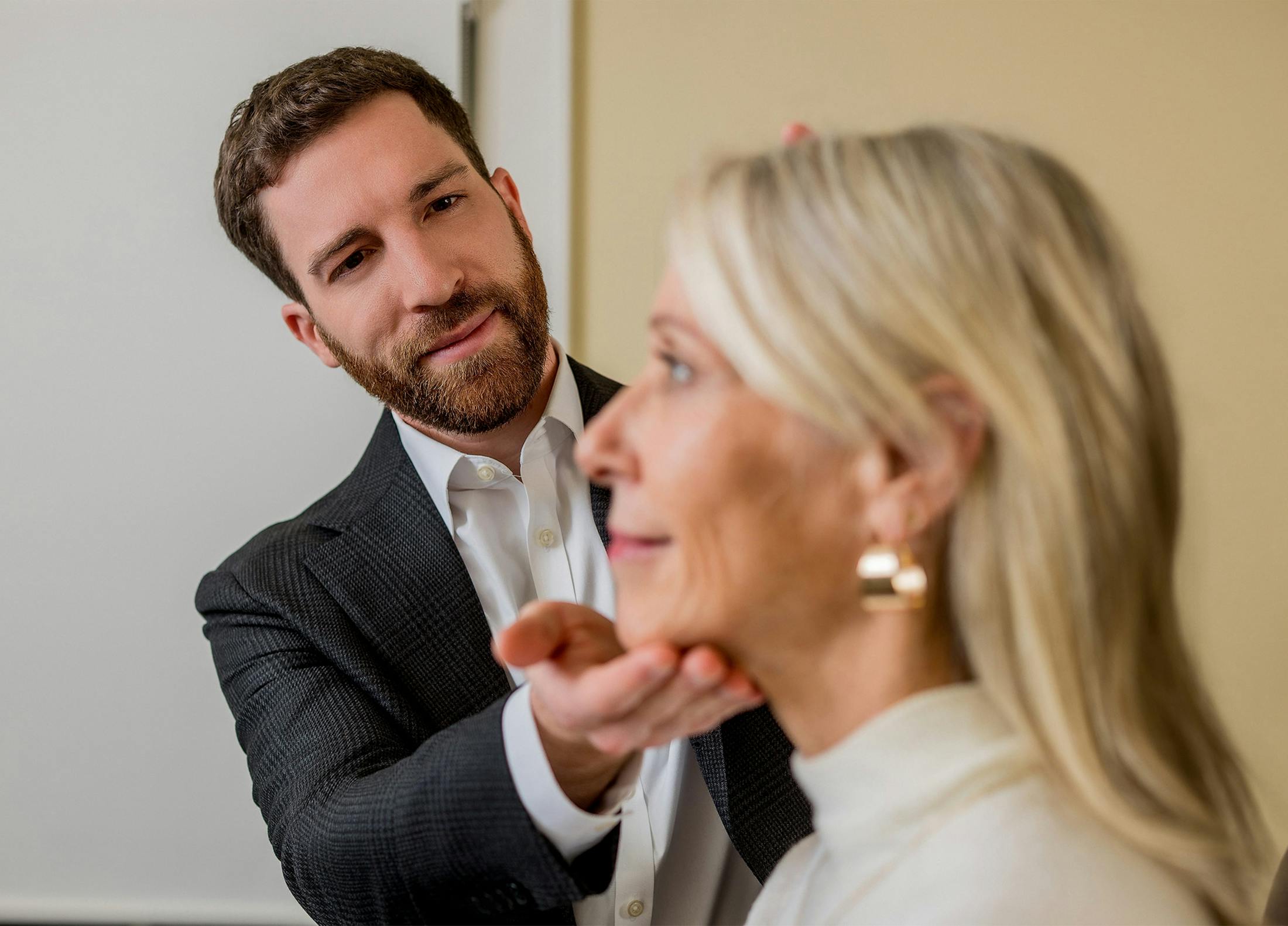
At your initial consultation, Dr. Shomorony will evaluate your anatomy, review prior surgical details, and clearly define what can be safely and realistically corrected. Every surgical plan reflects his direct analysis and judgment, grounded in structure and long-term outcome. On the day of surgery, he performs the procedure with deliberate, controlled technique, rebuilding support where needed and refining contour when the framework is secure.
Recovery is not delegated. Dr. Shomorony carefully monitors healing, assesses your progress, and communicates directly with you throughout the postoperative period. Revision patients often arrive understandably cautious and anxious, but Dr. Shomorony meets that with presence and clarity.
Revision rhinoplasty is not only about correcting what went wrong. It is about restoring trust. That can only happen through an excellent, structurally sound outcome that looks natural, functions properly, and endures over time.
Expected Improvements After Revision Rhinoplasty
- Correction of irregularities from prior surgery: Contour dents, asymmetries, pinching, or over-reduction from previous rhinoplasty can be carefully reshaped to create a smoother, more cohesive appearance. The goal is to remove distractions and restore visual balance.
- Restoration of structural support: If earlier surgery weakened the nasal framework, advanced grafting techniques can rebuild strength and stability so the nose maintains its shape over time. This reinforcement is essential for both appearance and function.
- Improved facial proportion: Revision surgery focuses on harmonizing the nose with the rest of the face, correcting distortions while preserving individuality. Subtle refinement can significantly improve overall balance.
- Enhanced breathing when support has been compromised: If airflow has been affected by structural changes, revision surgery can reinforce internal support mechanisms and improve function along with aesthetics.
- Renewed confidence and restored peace of mind: Beyond physical correction, revision rhinoplasty can restore confidence in your appearance. For many patients, achieving a stable, natural-looking result brings reassurance and a renewed sense of comfort in their own features.
Revision Rhinoplasty in Greenwich, CT: Ideal Candidates
Ideal candidates for revision rhinoplasty are individuals who remain dissatisfied after a prior nasal surgery or who are experiencing breathing difficulty due to structural compromise. Many patients arrive feeling understandably frustrated, discouraged, or uncertain about whether further improvement is even possible.
Revision rhinoplasty requires far more than cosmetic refinement—it demands advanced reconstructive skill and experienced judgment. Dr. Shomorony carefully evaluates structural support, remaining cartilage, skin thickness, scar tissue, and airway function to design a precise surgical plan tailored to your anatomy.
In the hands of a true rhinoplasty specialist, even complex secondary cases can be meaningfully improved. For patients in Greenwich, CT and surrounding communities seeking expert-level revision care, choosing a surgeon who routinely performs advanced nasal reconstruction is critical.
Revision Rhinoplasty Recovery and Results: What to Expect
Recovery after revision rhinoplasty requires patience, particularly in complex cases where structural grafting or framework reconstruction has been performed. Bruising typically improves within 10–14 days. Swelling resolves more gradually, with early contour visible within several weeks and continued refinement—especially in the nasal tip—over the following months. As swelling subsides and tissues soften, the nose reflects restored structure, improved proportion, and a natural appearance designed to endure.
Revision patients are monitored closely. Dr. Shomorony personally evaluates healing to ensure structural stability, proper graft integration, and balanced contour development. Follow-up care is not passive; it is deliberate and attentive. Questions are addressed directly, healing is assessed carefully, and progress is tracked with precision.
Few practices can provide what we do: the option of private recovery in a luxury setting. For patients seeking additional convenience during recovery, accommodations at The Inn at The Retreat at Split Rock may be arranged. The Inn offers an elevated, quiet setting with luxurious amenities, designed for exceptional comfort and discretion. It eliminates travel and directly leads to a more rapid, confidential recovery process. We would be pleased to discuss this recovery option with you in detail during your consultation.